Thursday, December 22, 2011

Records & Archives Department Receives Award

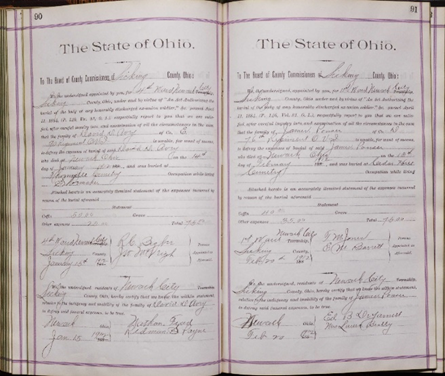
Coordinator Katy Klettlinger and the staff of the Licking County Records & Archives Department have received the 2011 Achievement Award from the Ohio Historical Records Advisory Board (OHRAB). According to the OHRAB Awards Committee, this award “recognizes significant accomplishments in preserving and improving access to historical records in any format by an Ohio archival institution. The Licking County Records and Archives Department was recognized for rescuing and making available public county records not seen for more than a century and effective management of contemporary records via its Records Keepers’ Roundtable.” At the December 20, 2011 Licking County Commissioners’ meeting, Stark County Records Manager John Runion and Ohio Attorney General Records Manager Pari Swift presented the award to Ms. Klettlinger.

The Records & Archives Department was created by the Board of County Commissioners in 2007 to salvage and organize endangered county records, and to create a records management program for current county agencies.

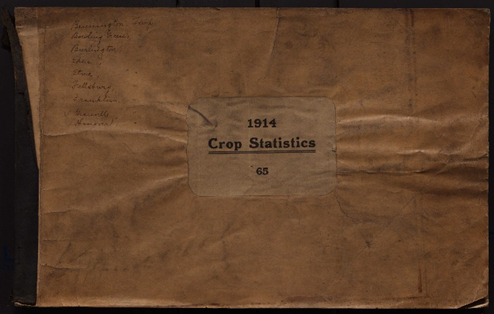
Since early 2008, approximately 3000 cubic feet of records have been transferred from the Courthouse Attic and the Historic Licking County Jail to the current Records & Archives facility, where they are stored in a controlled climate. Many of these records have been thoroughly cleaned, organized and catalogued. Volunteers and an intern have assisted staff with the salvage, cleaning and organization.

Soon after the salvaging program began, Katy Klettlinger interviewed the record keepers of county agencies to determine their needs. In 2010, the Records Keepers’ Roundtable was created as a vehicle for training and the sharing of information. Since its formation, records retention submissions have increased by 416%, and twelve offices have implemented records management practices.

The Records & Archives Department began a digital imaging program in 2010. Since then, over 208,000 scanned images have been created. Staff have also begun book scanning and microfilm conversion.

Left to Right: Back Row: Doug Smith, Licking County Commissioner; John Runion, Stark County Records Manager; Pari Swift, Ohio Attorney General Records Manager; Katy Klettlinger, Licking County Records Coordinator; Tim Bubb and Brad Feightner, Licking County Commissioners; Neil Phelps, Volunteer. Front Row: Angie Spray, Bill Markley and Allison Brewer, Licking County Records Staff.

Thursday, October 20, 2011

Volunteers Accomplish Key Records & Archives Tasks

We would like to recognize our volunteer Neil Phelps for his excellent work.  Neil has been a dedicated volunteer with the Records & Archives Department since October 2010.  Under the supervision of Records Clerk Bill Markley, Neil has recently helped in salvaging several boxes of records from the Historic Licking County Jail on 3rd Street in Newark.  During the past few decades, records of various county agencies were stored in that building.  Those records are now being inventoried, re-boxed and moved to the Records & Archives Department facility, which provides better conditions for storage and access.  In addition to this large project, Neil has also cleaned the pages of 19th and early-20th century Jail Registers, which are volumes that provide information about the inmates.  Cleaning old records such as these helps preserve them for future use.


Neil is also currently working on a history of the Historic Licking County Jail as a personal pursuit.  If you have any information about the old jail which you think might be of interest, please contact us at tel. 740-670-5121.

In addition to Neil Phelps, we have been blessed with other volunteers who have devoted their time and efforts on behalf of Records & Archives projects.  In 2010, Robert Sizelove created a very useful index of the burials at the Licking County Infirmary Cemetery.  Robert found much of this burial information by carefully searching the Infirmary Registers and other items which are part of the Records & Archives collections.  The cemetery is located near the intersection of State Route 37 and Union Station Road.  The burial index can be viewed at: http://www.lcounty.com/records/PDF/Infirmary%20Cemetery%20Register%201.pdf

If you are interested in volunteering with us, we would be glad to talk with you.  Please contact Bill Markley at tel. 740-670-5121, or email wmarkley@lcounty.com.

Wednesday, August 18, 2010

Infirmary Cemetery Burial Index and History Now Available

Our department is pleased to announce the recent posting of the County Infirmary Cemetery Index and History on our website at http://www.lcounty.com/records/frmInfirmary.aspx


Over the past six months, we had learned the community was very interested in burials located at the county's infirmary cemetery at Infirmary Mound Park in Granville Township.  A few indexes were created since the 1970's, but did not detail death dates, causes of death, or marker identifiers.  Research of infirmary records by department volunteer and cemetery researcher, Robert Sizelove, resulted in the discovery of more internments than previously thought. 

Also, a detailed history of the infirmary was created for the first time by Records Clerk, Bill Markley.  Bill started his employment with us in April of this year.  He has brought over twenty years  of previous experience in reference librarianship with almost ten years in archival reference to Licking County.  As a result, the history was compiled from many resources covering inmate life in addition to a general administrative history, which is of interest to genealogists and other researchers.

For more information on the county infirmary in addition to what is on our website, please contact Bill Markley at 740-670-5121 or archives@lcounty.com.

Thursday, April 22, 2010

Can offices really save money by managing their records?

In addition to being asked why records are required to be maintained by Ohio Law, our department is commonly asked how records management saves money.  Many people believe records management is cumbersome and not worth the effort.  Surprisingly, if records management is actively practiced, departments will reap the rewards.   Below are ways records management save money:

1.  Saves valuable staff time retrieving and filing records.

Last year, our department conducted a records survey and learned employees spend between 15-30 minutes to retrieve record(s) to perform a job function.  ARMA International, the world's largest records management professionals association, stated $5,521 of an employee's salary is spent each year searching for records they cannot find.  That really adds up!  Practicing records management lowers records search times allowing employees to perform their duties more effectively thus reducing overall staff costs.

2. Creates more office space by removing inactive records.

Effective records management saves space by ensuring the timely destruction of records that are no longer needed. Running out of space is one of the top problems when managing records.  When space runs out, departments will typically spend more money on storage space and  equipment instead of reviewing records for destruction that have past their retention period.  A storage cabinet alone can costs between $300 and $1,300.  Other offices will also consider records disposal to be too expensive and spend unneeded money elsewhere to alleviate their space limitations.  Proper records destruction provides reduced storage costs and faster and more accurate retrieval of information.

3. Helps properly define equipment needs.

Expensive new equipment, such as digital scanners and computers, are not purchased unless these tools will help you manage your information so much better that they repay or justify their costs.  Proper records management can help an office realize they do not need equipment or it will help them realize the equipment is crucial for their office.  Having tons of records does not solely legitimize purchasing equipment.  Other factors must be taken into consideration such as how many records are produced each year, how often are they used, how long are they required to be maintained, and how office employees and the public will benefit by viewing them in digital form.

4. Ensures compliance with the law.

In addition to following Ohio Public Records Law, good records managment allows for records to be quickly retrieved in the event of litigation and audits.  Records can be accessed for litigiation to prove the government has performed their duties correctly and save taxpayers on court and attorney fees.  Also, providing access to needed records during audits will prevent fines from the state.

How is the Records and Archives Department promoting sound records management in Licking County?

While we are a newer department, we have actively approached assisting county offices to improve their services.  Earlier this year, the department started Records Keepers' Roundtable (RKR), which comprises of county employees assigned to managing records in their offices.  The group provides records training, a forum to discuss strategies, and advocates to gain records needs to benefit offices countywide.  This summer, training will be provided to the group covering how to start an office level records management program and will learn some cost savings strategies while they build their programs. 

RKR was also instrumental in the purchase of an industrial shredder to begin a countywide shredding program.  Shredding will begin this summer, opening up valuable office space to lower operating costs.  In comparison to our backlog and  yearly records creation, the cost of an industrial shredder was more economical than using a vendor.  Also, by having the Records and Archives Department run the program, offices can be assured that records are disposed of legally and properly.

Future initiatives we are pursuing include a county-wide email policy and working with our Information Technology Department to manage electronic records.  With technology increasing at a record pace, it is our responsibility to not just manage paper records, but those in electronic format as well.

Thursday, January 28, 2010

Courthouse Attic Records Update

Over the past year, staff has been working hard to salvage records from the courthouse attic. Many people ask, “Why is removing these records important?” In addition to initiatives by local genealogists and historians over the years to have them moved to secure location, Licking County is required by Ohio Law to maintain the records it creates and receives through daily business. Records in the attic are difficult to retrieve when employees respond to public records requests. The county is required by law to respond to records request in a reasonable amount of time. Also, records are difficult to find because they are not organized, and the environment records are housed in is causing them to deteriorate. If records are falling apart then they are not accessible to the public according to law.

 In January 2009, the department began inventorying and removing permanent records from the attic. Some records were covered in dust, animal feces, and insects. Others were heavily mold damaged and will require digitization and microfilming to save valuable information not located in other sources.

Left: Records before salvage project began.


Today, seven hundred boxes/volumes of permanent value have been removed from the attic and are housed at our department. Staff members are currently cleaning records using basic preservation methods such as HEPA filter vacuuming, spot cleaning, phase boxing, and encapsulation. Records requiring the attention of a conservator will be sent out for repair and/or digitized and microfilmed in-house.


Records that have been cleaned and organized thus far are listed in the “Records Available” link on our website. While only 30%-35% of records have been removed from the attic and a select number of records have been organized for access, we look forward to adding records to our site on a regular basis.