Posts

Marriage Consents and Returns

Image
A marriage return is a document that officially records a wedding. It is completed by the person, such as a pastor, who solemnized the marriage.   It is called a “return” because it must be returned to the court that legally records marriages.   Returns in Licking County have typically indicated the names of the bride, groom and person who solemnized the marriage, along with the wedding date.   Sometimes the names of witnesses are also included.  Older marriage returns were called "Marriage Certificates" in Licking County, because they provided the Probate Court with certification that the couple actually got married.  Today, a marriage certificate is typically the document which the court gives to a couple after they are married. A Marriage Return, sent by the minister to the Probate Court.  Note that these records were called "Marriage Certificates" in the 1920's. Marriage consents are documents proving that a parent or guardian gives consent for ...

Street Construction Uncovers Rail History

Image
During the late-19th and early-20th Centuries, a popular way to get around Newark was by electric rail car.  In 1889, the Newark & Granville Electric Street Railway was completed from downtown Newark to a point a little ways east of Granville.  This was one of the first "interurbans," which were electric railways that connected towns.  Interurbans became a major means of transportation in the USA until motorized bus systems developed, automobiles became more affordable, and streets and rural roads were improved. Workers digging up the streets along the southeast corner of the Courthouse Square, where several railway spikes and ties were found In the summer of 2015, a major street construction project commenced around the Courthouse Square in Newark.  In early August, workers who were digging up South Park Place and South 2nd Street found several spikes and rail ties which were the remains of the interurban railway that went alongside the square. ...

Early Licking County Marriage Records

Image
Recently some records from the Licking County Probate Court were transferred to our department.  These include some 19th-Century marriage records which will be of interest to genealogists.  They are among the small number of county government records which survived the 1875 courthouse fire, and so they can be especially valuable in tracking down ancestors who were in the county. From a page in the Marriage Record, 1808-1828 The recently-transferred marriage records include: Marriage Record, 1808-1828 Transcribed Marriage Record, 1808-1827 Transcribed Marriage Record, 1828-1879 General Index to Early Marriages, 1809-1888 The 1808-1828 volume is a recent-day compilation of pages from earlier sources, which were almost certainly the original, official records.  Because it is a compilation, it might not have a record of every marriage that was performed during that time in the county, but it does have information about thousands of marriages. Most of the...

Disasters and Emergency Management in Licking County

Image
The Licking County Emergency Management Agency has provided disaster preparedness and response programs since 1988.  EMA replaced other local agencies which planned for and reacted to civil defense matters and natural disasters. Recently the Records & Archives Department has collected material from EMA, as well as some other items related to disaster management, civil defense and disasters in Licking County.  These include photographs, maps, planning documents and other objects, mostly from the 1970's through the 90's.  Several photographs are unidentified.  If you were involved in emergency relief efforts during this period, or otherwise might be able to identify people and incidents shown in the pictures, we would like to talk to you! Emergency personnel examining an accident scene A house severely damaged by a storm From early in the county's history, residents have helped each other recover from tornadoes, floods and other calamities.  In 1...

Researching the History of Your House and Property

Image
Learning about the history of your house and the land it sits on can be fascinating.  The characteristics of your house can offer clues about the times in which it was built.  You can also usually find out who owned your property, from the early years of Licking County onwards. Be advised, though:  it can be difficult and time-consuming to find a lot of information.  In many cases it is not possible to learn exactly when a house was built, but you can usually at least surmise an approximate date.  And when you learn the names of the people who lived on your property, you can often gather more information about their lives. Government records were not usually kept which specifically indicate when a house was built.  Sometimes, though, you can find a good clue about the construction date by looking at old tax records.  If a tax record from a certain year indicates a major increase in the value of a property, this suggests that a substantial new st...

Oral Histories of Former Elected Officials

Image
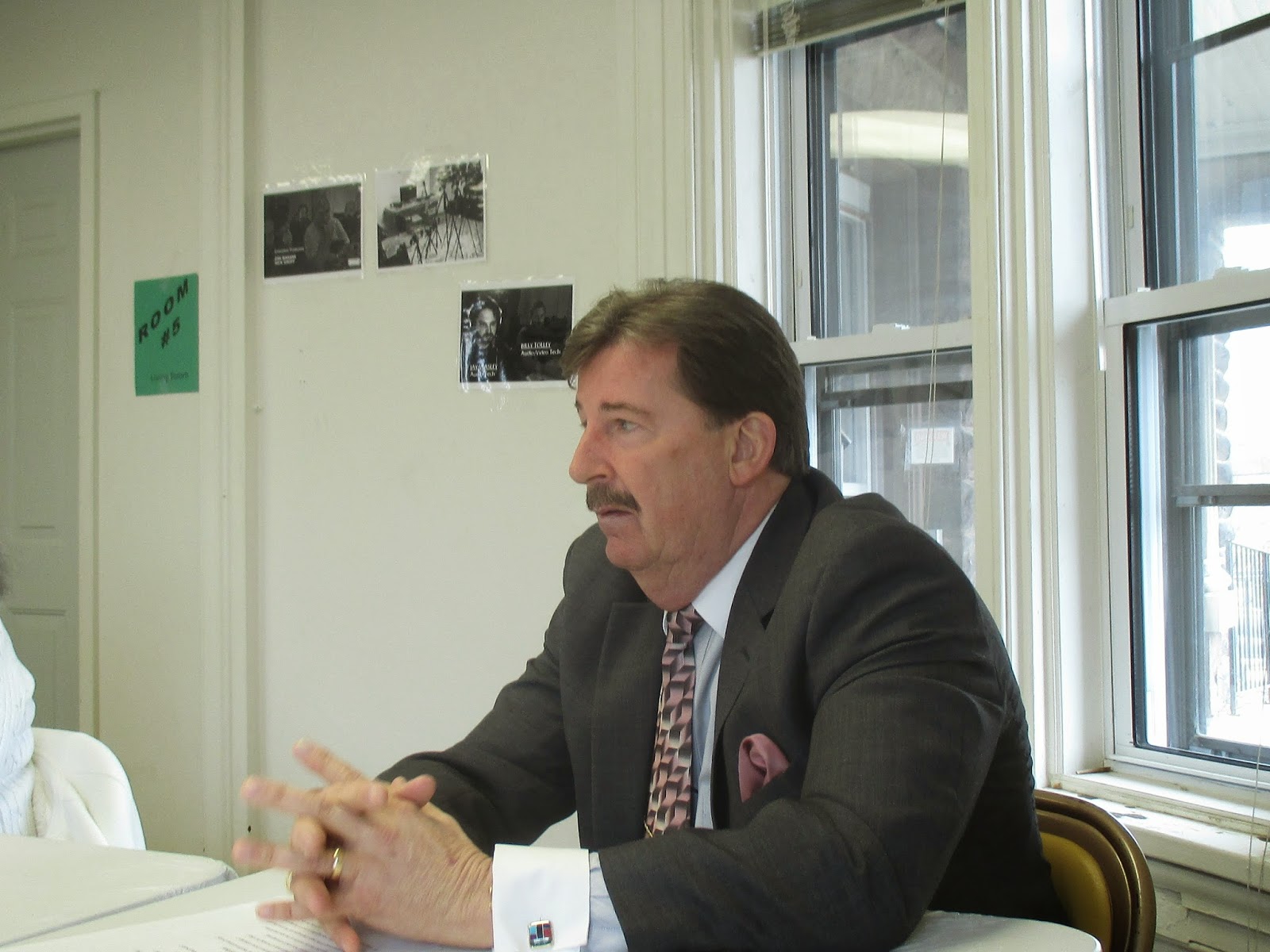
To add to the historical record of Licking County, we are interviewing former county officials about their experiences in and out of office.  You can listen to recordings of these interviews via YouTube, at  https://www.youtube.com/channel/UCmPSx7CyzCU8b9nWgWZGHsQ .  Also available at this link are oral histories of people who lived or worked at the Licking County Children's Home, and persons who were associated with the former County Jail on South 3rd Street in Newark. Former Sheriff Gerry Billy reminiscing in the old Licking County Jail The elected-official interviews which have been conducted so far contain many interesting reminiscences about government and life in general in the county.  The former officials who have already been interviewed are Judges Craig Baldwin, Greg Frost and Jon Spahr, Commissioners Don Hill and Marcia Phelps, Engineer Tim Lollo, and Sheriff Gerry Billy.  We are very grateful to all of them for the time they devoted to ...

Book Scanning

Image
For a few years now, our staff and volunteers have been using an Atiz BookDrive system to digitize books in our collection.  The BookDrive includes two cameras, special lights, a cradle for the book, and software for saving the images.  Digitizing helps to preserve fragile materials by lessening the need to page through them by hand, and it allows wider access to our documents as a result of the electronic copies. A volume placed in the cradle of the BookDrive The BookDrive scans can also be converted to images which are suitable for microfilm, thus providing a permanent copy of important records.  Senior Imaging Technician   Angie Spray creates microfilm in our department using a Kodak Archive Writer machine, from the images that are scanned on the BookDrive.  Archivists estimate that microfilm, when properly created and stored, will last approximately 500 years. An example of how we are able to view  the photographed pages in t he software ...